Endodontic

Root Canal Treatment

When decay or injury infects your tooth's nerve chamber, root canal treatment can save your tooth and relieve pain. We clean out the infection, seal the canals, and restore your tooth.
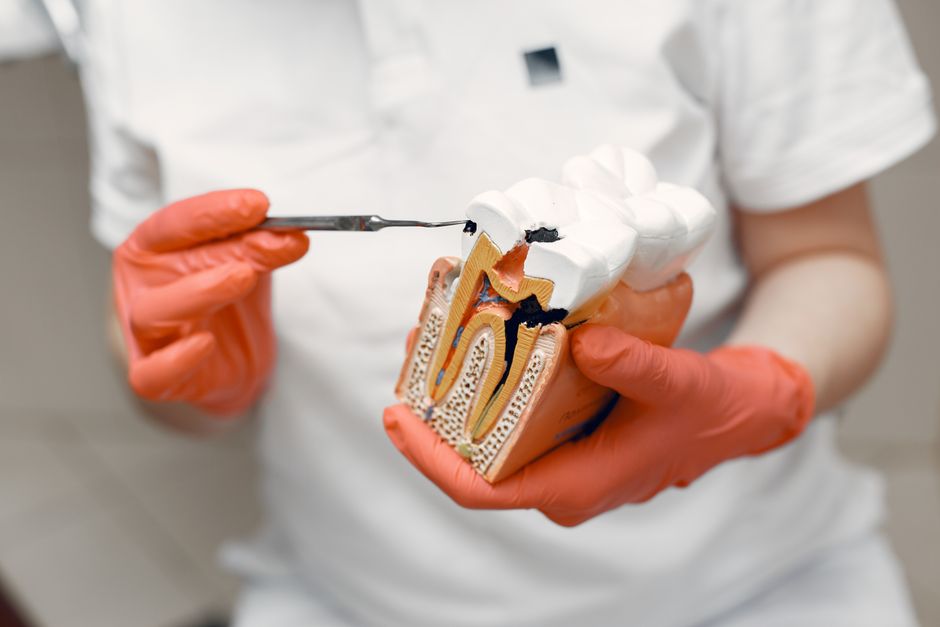
Close-up of dentist holding a tooth model, illustrating dental care concepts.

Save Your Tooth with Root Canal Treatment

If your tooth's nerve chamber becomes infected by decay or injury, root canal treatment is often the only way to save your tooth and relieve your discomfort.

Understanding Your Tooth's Structure

Inside your tooth's hard outer shell is a nourishing pulp of blood vessels and nerves. The root canals, which contain this pulp, extend down to the bone. When deep decay or an injury damages this delicate pulp, infection can set in—and that's when root canal treatment becomes necessary.

When Do You Need a Root Canal?

Some common signs that you may need root canal treatment include:

  • Spontaneous pain or throbbing while biting — discomfort that comes on without warning
  • Sensitivity to hot or cold foods — lingering pain after temperature changes
  • Severe decay or injury — that creates an abscess (infection) in the bone

Our Root Canal Process

We've broken down the procedure into five clear steps so you know exactly what to expect:

  1. Anesthesia & Access — After numbing the tooth completely, we make a small opening through the crown into the pulp chamber.
  2. Measurement — We carefully determine the length of each root canal.
  3. Cleaning — Unhealthy pulp is removed, and the canals are thoroughly cleaned, enlarged, and shaped.
  4. Filling & Sealing — The canals are filled and sealed. If needed, a metal post may be added for structural support or to help retain restorative materials.
  5. Temporary Restoration — The tooth is sealed with a temporary filling, then restored two weeks later with a permanent filling or crown.

Root canal treatment has an unfair reputation. With modern techniques and anesthesia, most patients report that the procedure is no more uncomfortable than having a routine filling. In fact, it relieves the pain you've been experiencing.

How it works
01

Anesthesia & Access

We numb the tooth completely and make a small opening through the crown into the pulp chamber.

02

Measurement

We carefully determine the exact length of each root canal to ensure thorough treatment.

03

Cleaning & Shaping

Infected pulp is removed, and the canals are cleaned, enlarged, and shaped to prepare for filling.

04

Filling & Sealing

Canals are filled and sealed. A post may be added if needed for structural support.

05

Restoration

The tooth is sealed with a temporary filling, then restored with a permanent filling or crown two weeks later.

Common questions
Will a root canal hurt?+

With modern anesthesia, root canal treatment is no more uncomfortable than having a routine filling. In fact, the procedure relieves the pain caused by the infection. Most patients are pleasantly surprised by how comfortable the process is.

Why can't I just have the tooth pulled?+

Saving your natural tooth is always the best option when possible. Your natural tooth preserves your jawbone, maintains proper spacing, and functions better than any replacement. Root canal treatment allows you to keep your tooth for years to come.

How long does the treatment take?+

The root canal procedure itself typically takes one appointment. We'll place a temporary filling, then you'll return about two weeks later for your permanent restoration—either a filling or crown, depending on the tooth's condition.

Get in touchSomerset, NJ

Ready when you are — let's get you smiling.

New patients are always welcome. Give us a call, and we'll find a time that fits — gentle care, honest answers, no pressure.

  • No-pressure, unhurried first visit
  • We file your insurance for you
  • Easy online booking, day or night
Call (732) 545-0001Contact us